You come home to a shredded couch cushion, a chewed table leg, or trash spread across the kitchen floor. It’s frustrating, and it’s easy to think your dog did it on purpose.
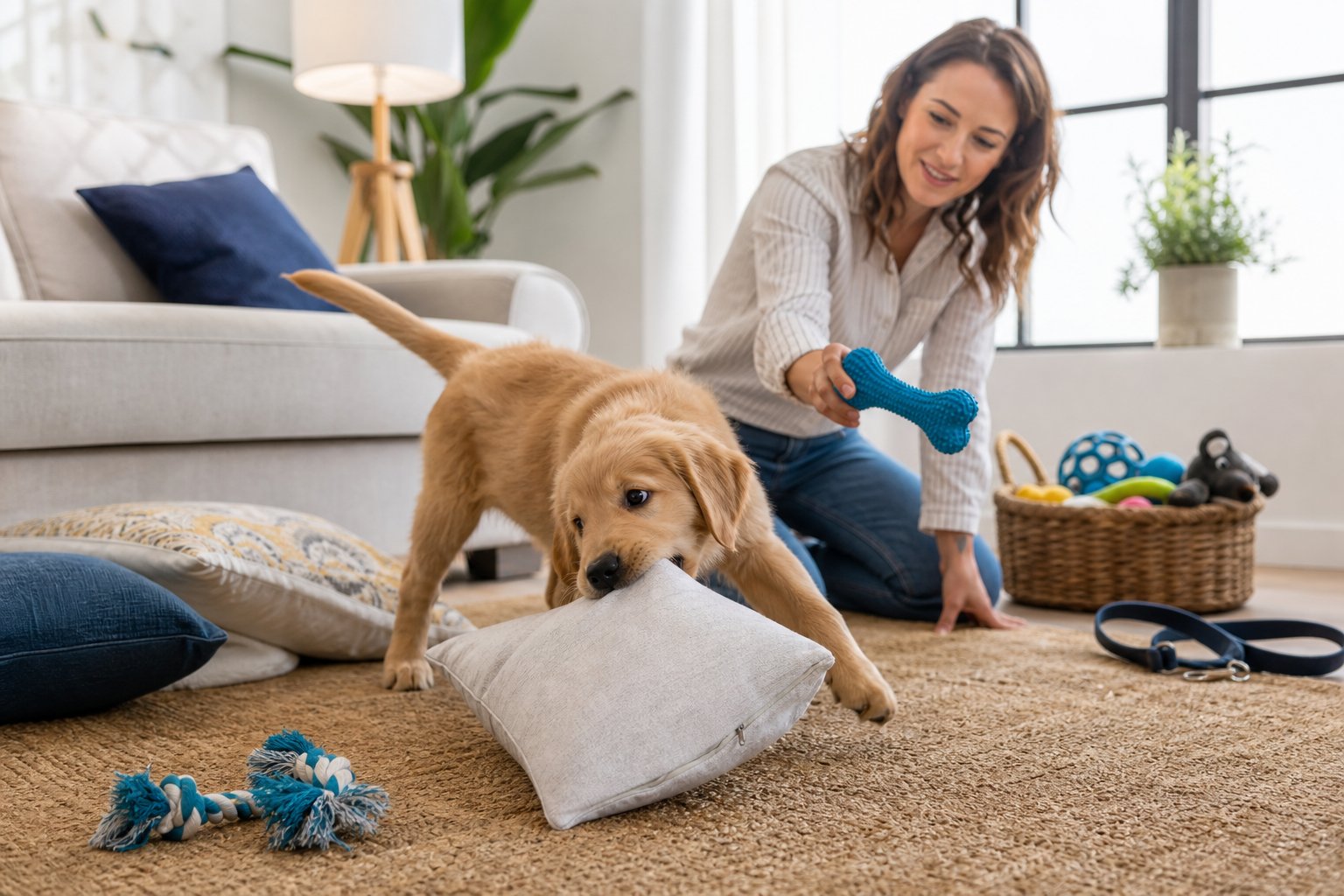
Destructive dog behavior is almost always a sign of unmet needs, not spite, and the fix is a mix of more exercise, daily mental enrichment, and better management of your dog’s space. Dogs live in the moment, so they don’t connect your leaving with your reaction hours later. What looks like payback is usually stress, under-stimulation, or anxiety.
The good news is that a bored dog responds quickly once you change the routine. Small daily habits, like puzzle feeders, short training sessions, and toy rotation, can tire a dog out as much as a walk around the block. Below, you’ll learn how to find the real cause of the damage, protect your home while you work on it, and build a plan that actually sticks.
Key Takeaways
- Figure out what’s driving the chewing before you overhaul your dog’s routine.
- Daily exercise, mental enrichment, and safe chew options prevent most household damage.
- Ongoing destruction or distress when you leave may call for a trainer or vet.
Identify the Cause Before You Change the Routine
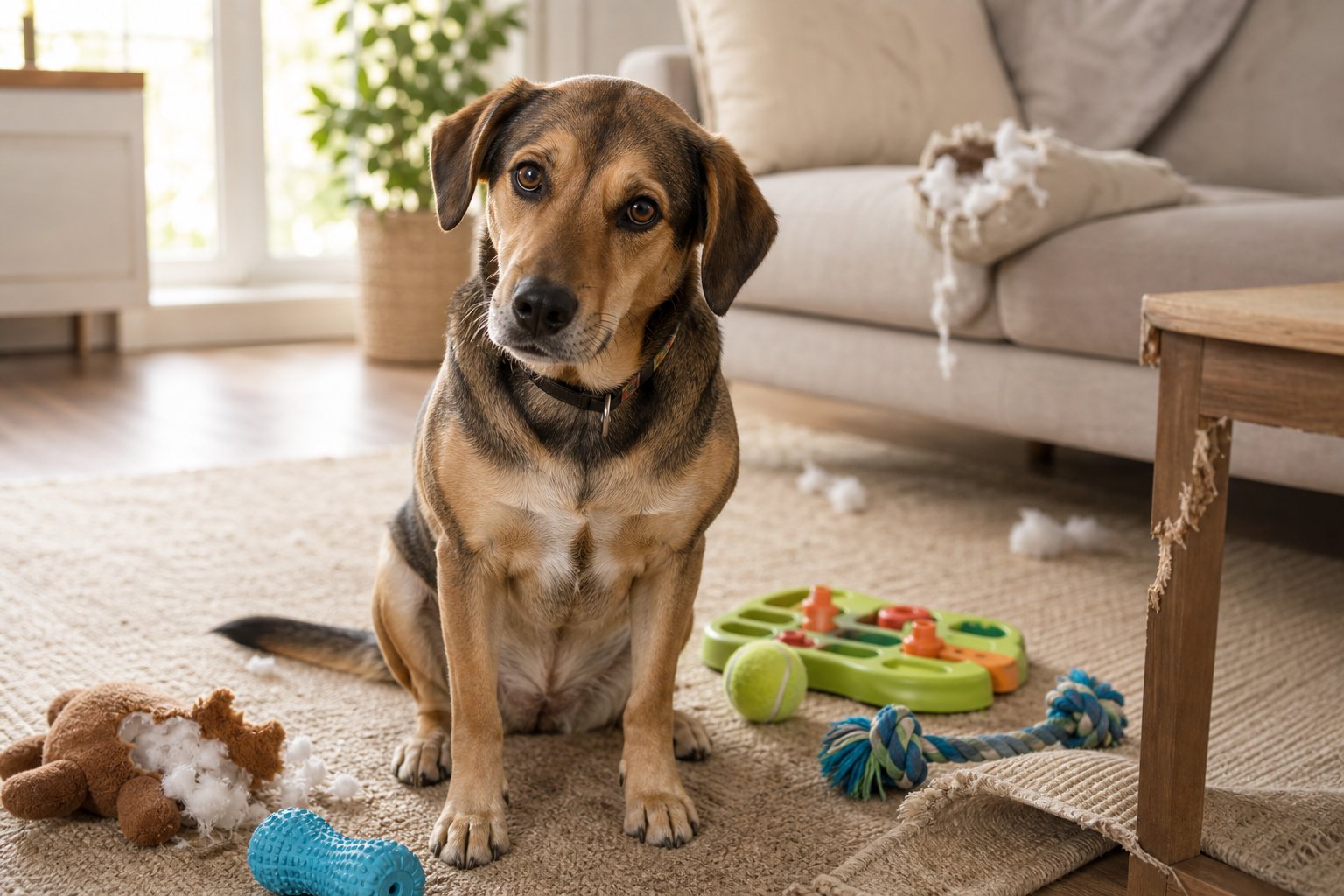
Chewed baseboards and shredded couch cushions look the same no matter why they happened, but the fix depends entirely on the reason behind them. A bored dog, an anxious dog, and a teething puppy each need a different plan.
Signs of Boredom and Excess Energy
Boredom is the most common driver of destructive dog behavior. Your dog has hours to fill and nothing to do, so they invent a job.
Look for these patterns:
- Damage is scattered and varied — a shoe here, a pillow there, unrolled toilet paper, tipped trash cans
- Digging in the yard or scratching at rugs
- Restlessness when you’re home, pacing, pawing at you, or bringing you toys constantly
- Excessive barking or jumping on guests
- Chewing happens any time, not just when you leave
Bored dogs usually seem happy and relaxed during the destruction, not panicked. High-energy breeds like Border Collies and terriers hit this wall faster than a Chihuahua would, since a short walk around the block does not come close to meeting their needs.
When Destruction May Be Separation Anxiety
Separation anxiety in dogs looks similar at first glance, but the details are different.
| Boredom | Separation Anxiety |
|---|---|
| Damage anywhere in the house | Damage focused on doors, windows, crates, and exit points |
| Dog is calm when you leave | Whining, pacing, or panting as you grab your keys |
| Chews for fun | May injure paws or mouth trying to escape |
| No accidents indoors | House-trained dog urinates or defecates while alone |
| Eats treats you leave behind | Ignores food entirely until you return |
Setting up a phone camera for the first 30 minutes after you leave tells you a lot. A dog who settles down within 15 minutes is bored. A dog who never settles is distressed.
Anxiety does not improve with more exercise alone. If you see these signs, talk with a certified trainer or a veterinary behaviorist about a desensitization plan.
Puppy Teething, Medical Problems, and Other Triggers
Puppies between roughly 3 and 7 months chew because their adult teeth are coming in and their gums hurt. This is normal development, not misbehavior, and it fades with age and appropriate chew toys.
Other causes worth ruling out:
- Pain or illness — dental disease, itchy skin, allergies, or gastrointestinal discomfort can all lead to licking, gnawing, and chewing at objects or at themselves
- Noise phobia — thunderstorms and fireworks trigger frantic chewing and scratching, often near doors
- Pica — swallowing non-food items like fabric or rocks, which can cause blockages
- Diet — a dog who is genuinely hungry may go after food packaging, counters, or the trash
Book a visit with your veterinarian if the chewing started suddenly in an adult dog, if it targets their own body, or if it comes with changes in appetite, weight, or energy. Ruling out a medical cause first saves you from spending weeks on a training plan that was never going to work.
Prevent Damage While You Address the Behavior
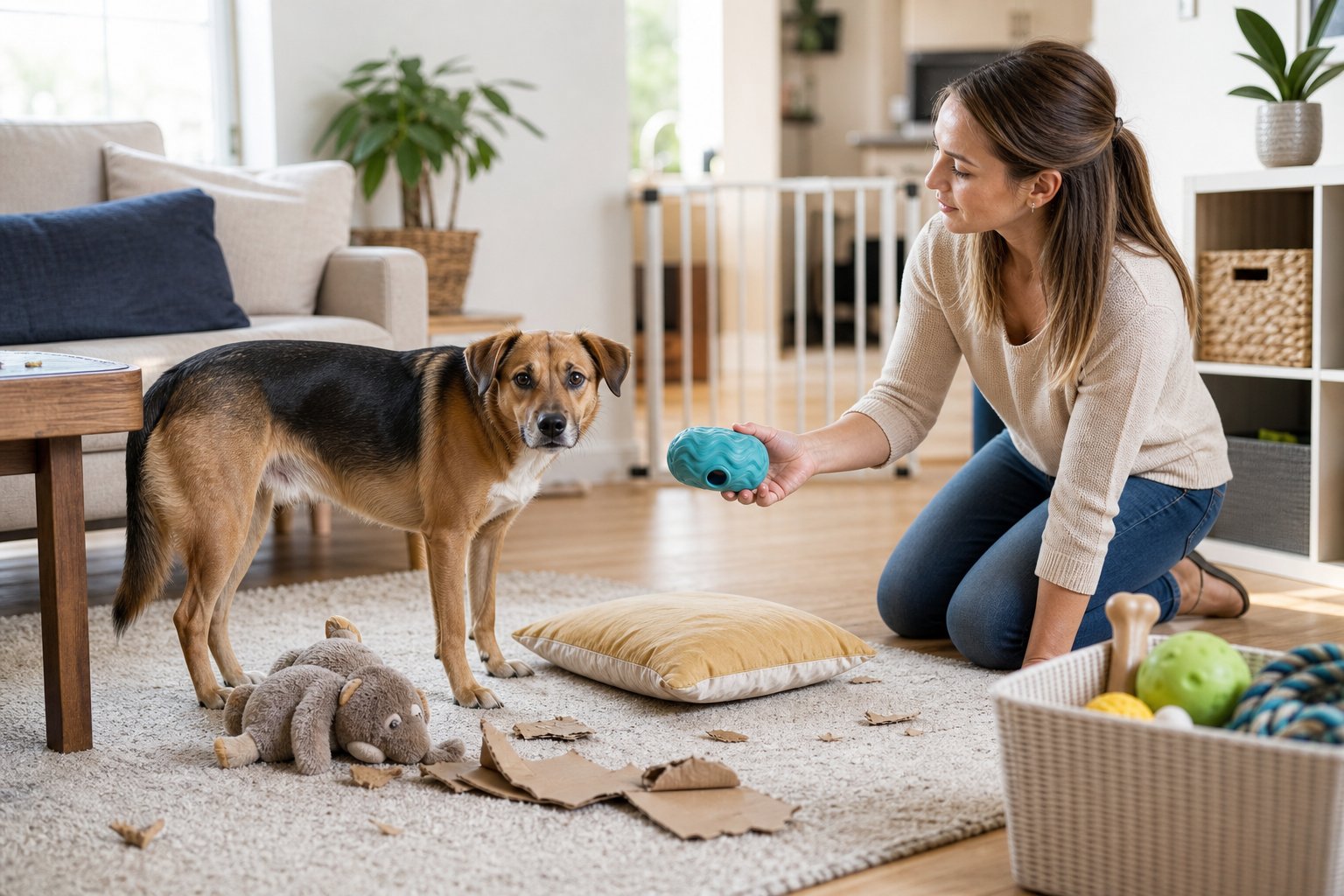
Training takes weeks, but your couch cushions can’t wait that weeks. While you work on the root cause, you can block access to the things your dog wants to chew and give them a safe place to stay when you’re not watching.
Dog-Proof Rooms and Remove Tempting Items
Walk through your home at your dog’s eye level. Anything soft, chewy, or that smells like you is a target.
Trainers at Best Friends Animal Society suggest a few simple ways to remove temptation:
- Store shoes in a closed closet
- Clear food off counters and tables
- Run cords through cord protectors
- Switch to a trash can with a locking lid
Also pick up remotes, eyeglasses, kids’ toys, and laundry baskets. Dirty socks and underwear are common chew targets because they carry your scent.
If your dog fixates on one item, like a table leg or a rug corner, block that spot with furniture or an exercise pen until the habit fades.
Create a Safe Unsupervised Area
Set up one room or corner where your dog can’t get into trouble. A spare bedroom, laundry room, or a section of the kitchen usually works well.
Strip the space down to the basics: water, a comfortable bed, and two or three approved chew toys. Skip anything with stuffing or squeakers that come loose if your dog shreds toys.
Rotate the dog toys every few days so the space stays interesting. A frozen stuffed toy or treat dispenser gives your dog a job for the first 20 to 30 minutes alone, which is often when destructive dog behavior starts.
Leave a radio or white noise on if outside sounds set your dog off.
Use Crates and Gates Appropriately
A pet gate is the easier starting point. It keeps your dog in a safe zone without the closed-in feeling some dogs dislike, and it lets them still see and hear you.
Crate training works well when the crate is introduced slowly and paired with food, toys, and short practice sessions. Feed meals inside with the door open, then build up to a few minutes with it closed.
Keep crate time short. Most adult dogs shouldn’t be crated more than four hours at a stretch during the day, and puppies need much less.
Never use the crate as punishment. If your dog panics, drools, or tries to break out, stop and talk to a trainer or your vet, because that points to anxiety rather than boredom.
Meet Your Dog’s Daily Exercise Needs
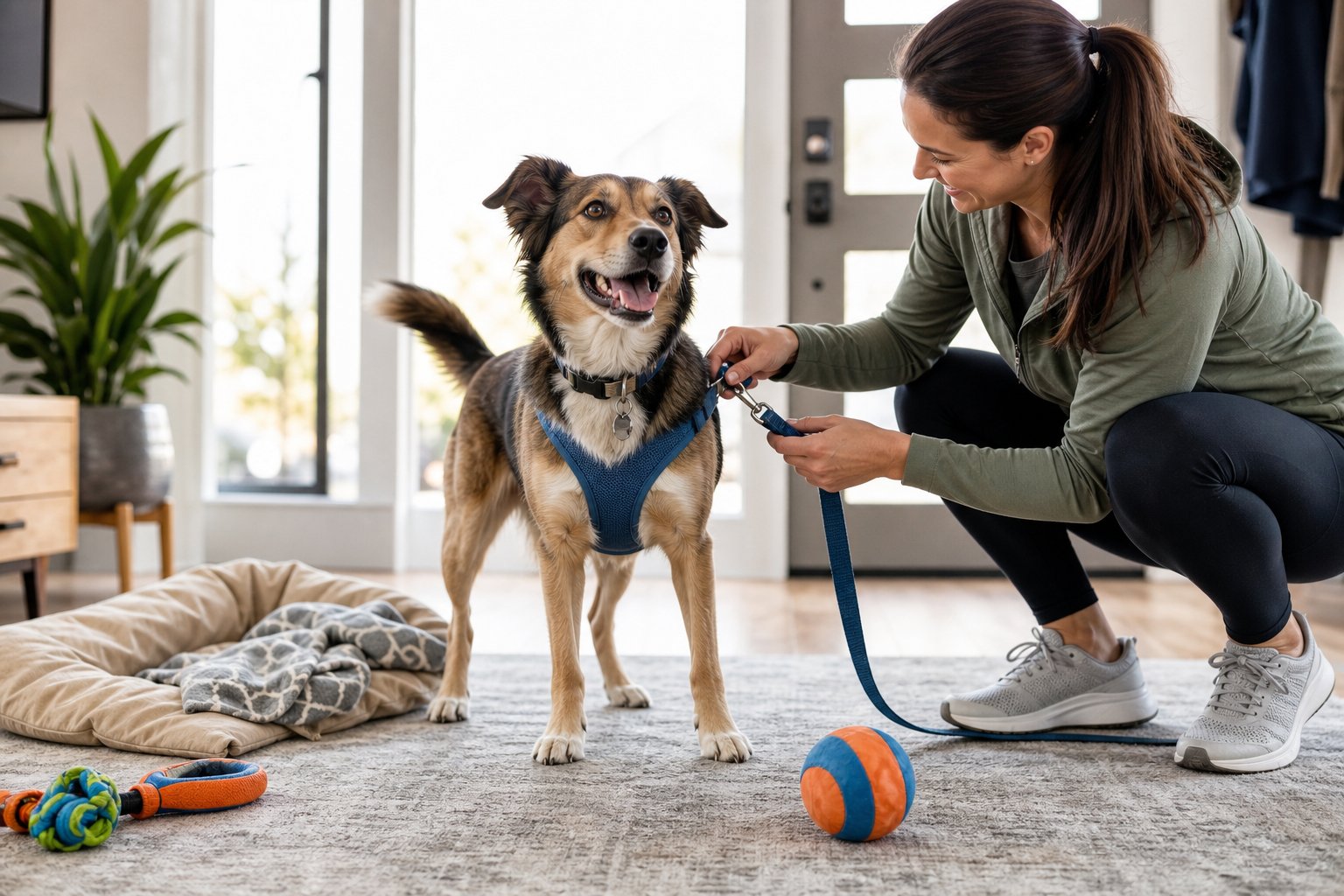
A tired dog rarely shreds couch cushions. Most dogs need at least 30 minutes of activity each day, and high-energy breeds often need one to two hours, split between walking, sniffing, and games that make them think and move.
Match Activity to Age, Health, and Energy Level
Not every dog needs the same workout. PetMD suggests a minimum of 30 minutes daily, with active breeds needing far more.
Breeds developed for jobs, like Border Collies, Huskies, and Australian Shepherds, were built to work for hours. A short walk around the block will not satisfy them.
Puppies do better with several short bursts of play than one long session. Their joints are still growing, so skip long runs on hard pavement.
Senior dogs and dogs with arthritis or heart problems need gentler options. Two or three slow walks and some easy sniffing games often work better than a jog.
If your dog limps, pants heavily, or lags behind, cut the session short and talk to your vet.
Use Walks, Sniffing, and Structured Outdoor Time
Walks do more than burn calories. Sniffing gives your dog information about the world, and it tires the brain as much as the body.
Try these adjustments:
- Change your route a few times a week so the smells stay new
- Allow sniff breaks instead of pulling your dog along
- Add hills or stairs to make a short walk harder
- Visit new places, like a park, trail, or quiet parking lot
Longer outings, such as hiking or a session at a fenced field, work well on days when you have extra time. Vets note that purposeful exercise and new environments help meet a dog’s physical and mental needs.
If your schedule is tight, a dog walker or a playdate with a compatible dog can fill the gap.
Add Interactive Games That Burn Energy
Games in the yard or hallway can drain energy quickly, which matters on rainy days or before you leave the house.
Fetch is the most efficient option. Ten minutes of sprinting after a ball often does more than a slow 30-minute walk. Throw the ball uphill or up a set of stairs to increase the effort.
Tug-of-war builds strength and gives your dog an outlet for pulling and gripping. Set clear rules: the game starts when you say so and ends when you ask for the toy back.
Other choices include flirt poles, chase games in a hallway, and short training drills mixed into play. Trainers often recommend tiring your dog out before you leave, since a bored dog left alone with extra energy tends to find its own entertainment.
Watch your dog’s behavior after each session. If pacing and chewing drop off, you have found the right amount.
Build Mental Enrichment Into Every Day
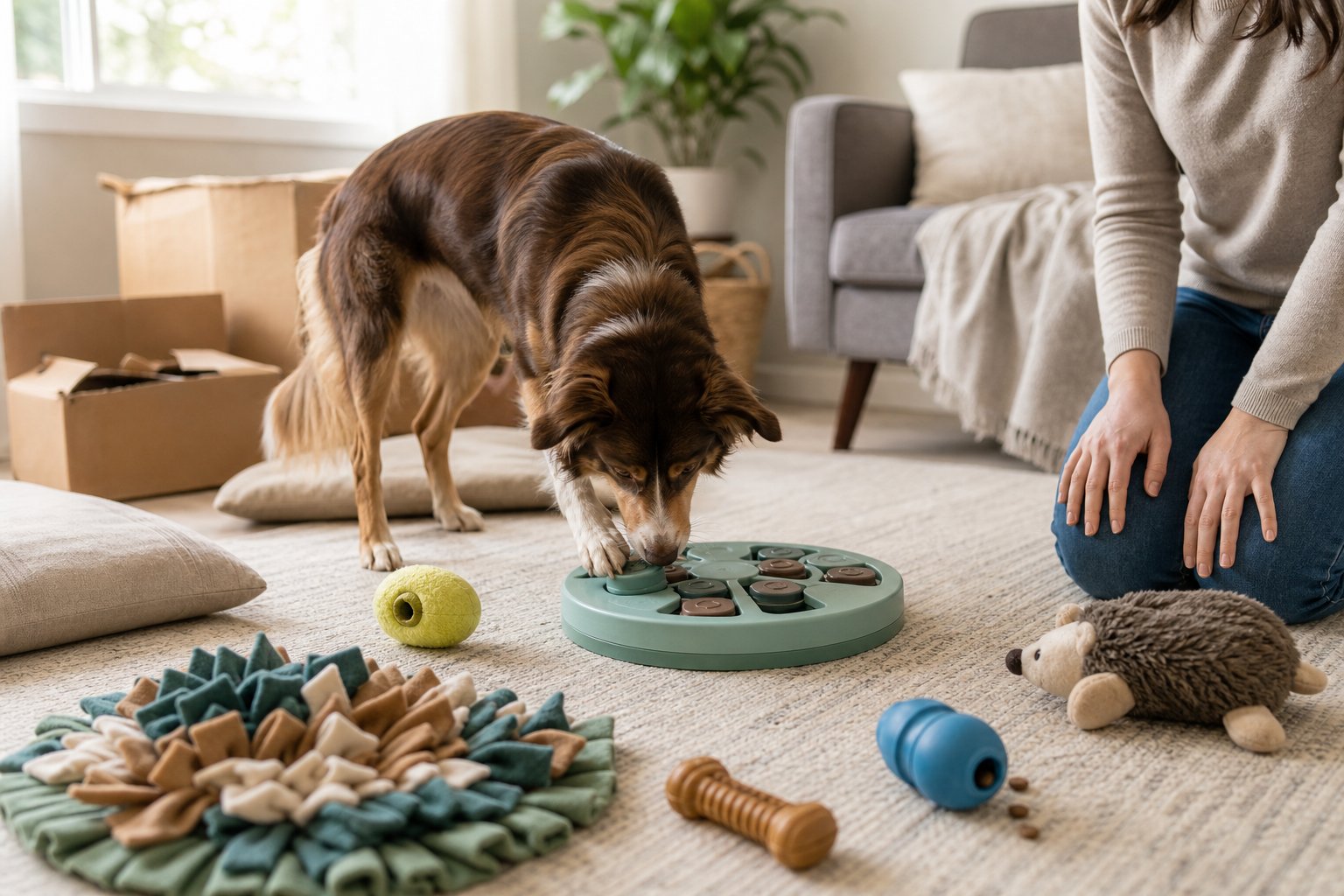
A dog that works for food, sniffs out hidden treats, and gets new challenges each week has far less energy left for chewing your baseboards. Ten minutes of thinking often settles a dog more than an extra lap around the block.
Choose Food Puzzles and Treat-Dispensing Toys
Stop using a plain bowl. Feed part of your dog’s daily kibble through food puzzles that make dogs work for rewards instead.
Start easy. A wobbler or a treat ball that drops kibble with a nudge teaches your dog that effort pays off. Sliding-panel puzzles come next.
A Kong is the workhorse here. Pack it with canned food, plain yogurt, or a little peanut butter, then freeze it overnight so it lasts longer.
Watch the first few sessions. If your dog walks away or starts pawing hard at the toy, make it easier by loosening the filling or removing a lid.
Two safety notes:
- Skip xylitol-sweetened peanut butter, which is toxic to dogs.
- Toss cracked or chewed-through toys.
Use Scent Games and Snuffle Mats
Sniffing is naturally calming for dogs, and it costs you almost nothing to set up.
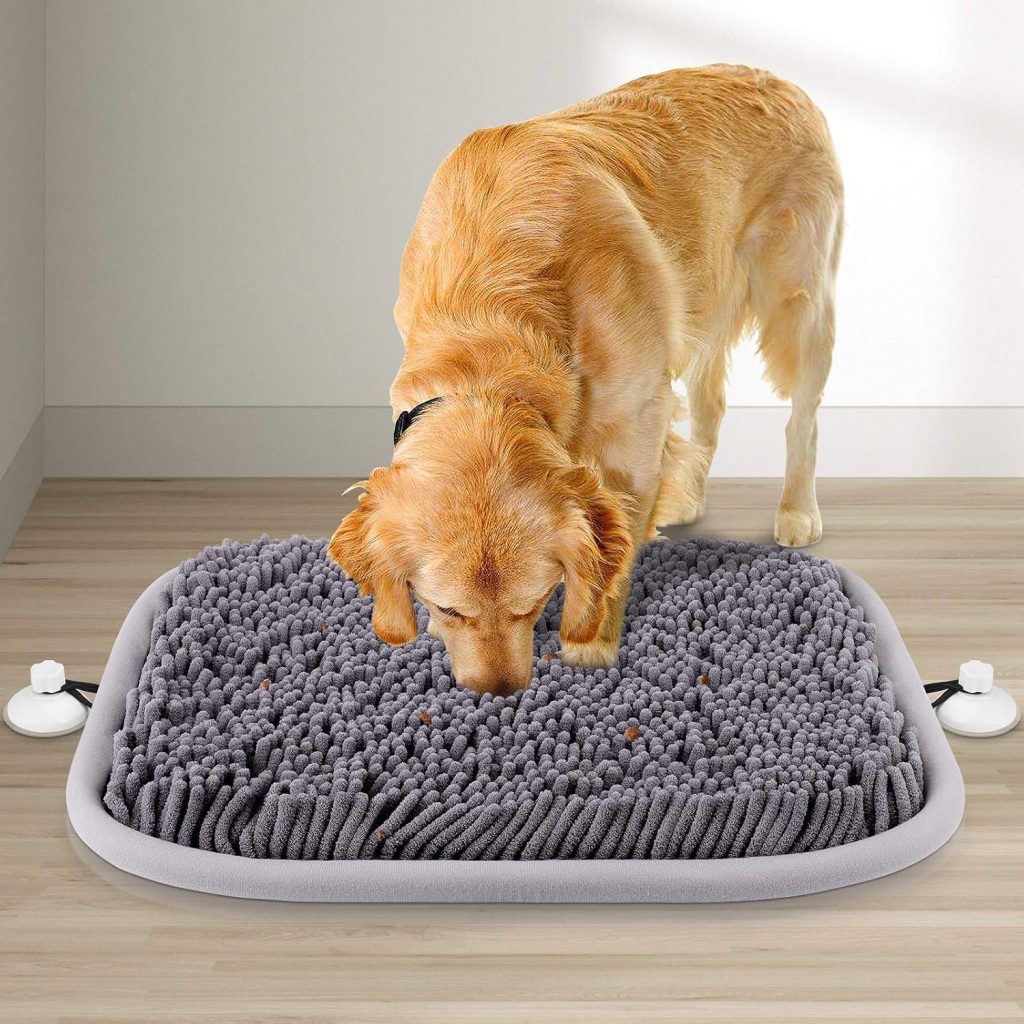
See All Snuffle Mats on Amazon
A snuffle mat is a fabric mat with dozens of folds. Sprinkle kibble into the fibers and your dog noses through it, which satisfies natural foraging instincts while burning mental energy.
No mat? Roll treats into an old towel or scatter kibble across a rug or the lawn.
Try a simple find-it game: have your dog sit, hide three small treat piles in one room, then release them to search. Make it harder by hiding food behind chair legs or under a cardboard box.
Feeding one meal a day this way is often enough to change afternoon behavior.
Rotate Activities to Keep Them Novel
Dogs lose interest in the same toy sitting in the same basket. Keep only four or five items out and store the rest.
Swap the sets every week. Old toys come back feeling new, and you spend nothing.
| Day | Activity |
|---|---|
| Monday | Frozen Kong |
| Tuesday | Snuffle mat breakfast |
| Wednesday | 10-minute trick training |
| Thursday | Puzzle feeder |
| Friday | Scatter feed outside |
| Saturday | Hide-and-seek |
| Sunday | Chew or lick mat |
Rotating food puzzles, scent games, and short training sessions keeps each one interesting. Track what your dog finishes quickly and what they abandon, then adjust the difficulty.
Redirect Chewing With Better Choices
Chewing is a normal dog behavior, not a sign of spite. Your job is to give your dog something better to chew, teach them which items belong to them, and use taste deterrents only as a short-term backup.
Offer Safe, Durable Chew Options
Dogs need chew toys that match their size, age, and chewing strength. A hard nylon bone that works for a Labrador can crack a small dog’s teeth.
Keep a few types on hand so your dog has choices:
| Chew type | Best for | Notes |
|---|---|---|
| Rubber toys you can stuff | Power chewers, bored dogs | Fill with peanut butter or kibble and freeze |
| Puzzle feeders | Dogs left alone | Makes meals last longer |
| Natural chews (bully sticks, tendons) | Most adult dogs | Supervise and remove small end pieces |
| Frozen wet washcloth | Teething puppies | Soothes sore gums |
Rotate dog toys every few days so they stay interesting. Old toys feel new again after a week in the closet.
Toss any chew that splinters, cracks, or gets small enough to swallow. Safe chewing habits depend as much on supervision as on the toy itself.
Teach the Difference Between Toys and Household Items
Dogs don’t naturally know a table leg is off limits. You have to show them.
When you catch your dog chewing something wrong, calmly say “no” or “leave it,” take the item away, and hand over an approved chew. Praise them the second they start chewing the right thing.
That praise matters. Positive reinforcement teaches your dog what to do, while scolding alone only teaches them to hide the behavior.
Skip old shoes and knotted socks as toys. Your dog can’t tell the difference between a retired sneaker and your new ones.
Manage the space, too. Close doors, use baby gates, and pick up remotes, cords, and shoes until the habit sticks. Most owners see real progress in two to four weeks with steady practice.
Use Deterrents Carefully and Sparingly
Bitter spray can help protect chair legs and baseboards, but it isn’t a training plan. Some dogs ignore the taste completely.
If you try it, test a small hidden spot first so it doesn’t stain wood or fabric. Reapply every day or two, since the flavor fades fast.
Pair the spray with a nearby chew toy. Otherwise you’ve only blocked one target, and your dog moves on to the next.
Never use physical punishment or shock collars for destructive chewing. They increase stress, and stressed dogs often chew more, not less.
Plan to phase deterrents out. Once your dog reliably picks their own chews, the spray has done its job.
Train Calm, Appropriate Behavior Consistently
Enrichment and exercise cut down on damage, but your dog still needs to learn which choices earn rewards. That comes from daily practice, a few simple cues, and a response to accidents that doesn’t teach your dog to hide from you.
Reward the Behaviors You Want to See
Dogs repeat what pays off. If your dog chews a rubber toy instead of the table leg, say “yes” and hand over a treat or start a quick game of tug.
The same applies to calm behavior. When your dog lies down on their bed while you cook or work, drop a treat between their paws without saying a word.
Timing matters more than the size of the reward. Mark the behavior within a second or two so your dog connects the treat to the right action.
Be consistent about what’s allowed, too. Giving old shoes or socks as chew toys sends mixed signals, since your dog can’t tell your worn sneakers from your new ones.
Practice Leave It, Settle, and Trade Cues
Three cues handle most household problems:
| Cue | What it does | How to start |
|---|---|---|
| Leave it | Stops your dog before they grab something | Show a treat in your closed hand, say “leave it,” reward when they back off |
| Settle | Sends your dog to a mat or bed to relax | Lure them onto the mat, reward each time they lie down and stay put |
| Trade | Gets an item back without a chase | Offer a better item, take the stolen one when they let go, then praise |
Run short sessions, two or three minutes at a time, several times a day. Practice in easy settings first, then add distractions like a dropped sock or an open door.
If your dog guards items or growls when you approach, contact a professional dog trainer rather than pushing the trade on your own.
Avoid Punishment After You Find Damage
Scolding your dog over a shredded cushion an hour later teaches nothing about chewing. Your dog can’t link your anger to something they did earlier, so all they learn is that you sometimes get upset.
Harsh corrections can also make a dog anxious or fearful of you, and anxiety often leads to more chewing, not less.
Put your dog in another room while you clean up. Watching you handle the wrecked item can look like play to them.
Then adjust the setup. Block access to that area, add a chew your dog actually likes, and increase exercise or puzzle feeding for the next few days.
Help Dogs Cope With Time Alone
Not every chewed cushion comes from boredom. Some dogs panic the moment you pick up your keys, and that panic needs a different plan than a puzzle toy.
Recognize Anxiety-Related Warning Signs
Boredom damage and panic damage look different. A bored dog usually shreds whatever is nearby, then naps.
A dog with separation anxiety often targets exits. Look for scratched door frames, chewed window sills, or damage near the spot where you left.
Other common signs of separation anxiety in dogs include:
- Drooling or panting heavily when you get ready to go
- Barking or howling that starts within minutes of your leaving
- Accidents indoors from a fully house-trained dog
- Pacing the same path over and over
- Refusing food or ignoring a stuffed toy while alone
A phone camera or pet cam gives you the clearest answer. Record the first 30 minutes after you walk out and watch what actually happens.
Use Gradual Departure Training
The goal is teaching your dog that you leaving is boring and predictable, not scary. Work in small steps and only move forward when your dog stays relaxed.
Start by picking up your keys and sitting back down. Do that several times until your dog stops reacting.
Then step outside and come back in after five seconds. Build to 30 seconds, then two minutes, then ten.
Pair each departure with something good. Hiding small piles of kibble around the room or handing over a frozen stuffed toy turns your exit into a signal that something fun starts.
Use positive reinforcement for calm behavior, not excited greetings. Skip long goodbyes and keep your return low-key.
Automatic treat dispensers can drop a snack a few minutes after you leave, which helps some dogs settle. If your dog will not eat at all while alone, back up to a shorter absence.
Severe cases need a certified trainer or veterinary behaviorist. Progress can take weeks, and pushing too fast usually sets you back.
Know When Crating Is Not the Right Solution
Crate training helps many dogs feel secure, but it does not fix panic. A dog with real separation anxiety can hurt themselves trying to escape a crate.
Watch for these red flags:
| Sign | What It Means |
|---|---|
| Broken teeth or bloody paws | Frantic escape attempts |
| Bent bars or damaged crate door | The crate is adding stress |
| Heavy drooling that soaks bedding | High panic, not settling |
| Screaming or throwing body at the door | Crate is not a safe space |
If you see any of these, stop using the crate for alone time. Try a puppy-proofed room, a pen, or a gated kitchen instead.
Crates work best when your dog chooses to go in on their own with the door open. Feed meals inside, leave the door propped, and never use the crate as punishment.
Some dogs simply do better with more space and a window view. Others need a quiet, dim room away from street noise.
Get Professional Support for Persistent Destruction
Some chewing and shredding won’t stop with more walks and better toys. When damage keeps happening after weeks of exercise, enrichment, and management, a veterinarian and a qualified trainer can find what’s actually driving it.
When to Schedule a Veterinary Visit
Start with your vet before you start a training plan. Destructive dog behavior can have a medical cause, and no amount of practice will fix a health problem.
Book an appointment if you notice any of these:
- Sudden changes in a dog who was previously calm at home
- Chewing on odd items like rocks, drywall, or dirt
- Bad breath, dropped food, or pawing at the mouth, which can point to dental pain
- Drinking, eating, or peeing more than usual
- Confusion or restless nights in a senior dog
Vets often recommend baseline bloodwork and urinalysis to rule out underlying conditions. Neurological issues, hormone imbalances, and nutritional gaps can all show up as chewing or scratching.
Your vet can also talk about anti-anxiety medication if fear is part of the picture.
When to Contact a Qualified Trainer or Behavior Professional
Once health problems are ruled out, a professional dog trainer helps you build a plan you can actually follow. Look for one when destruction is severe or keeps repeating despite your best efforts.
Good reasons to call:
| Situation | Who to Look For |
|---|---|
| General chewing, digging, boredom | Certified professional dog trainer (CPDT-KA) |
| Separation anxiety in dogs | Certified Separation Anxiety Trainer (CSAT) |
| Aggression or panic-level fear | Veterinary behaviorist (DACVB) |
Choose someone who uses positive reinforcement. Aversive methods can damage trust and increase stress, which often makes chewing worse rather than better.
Ask about certifications, and ask what happens when your dog gets something wrong.
Urgent Safety Risks to Address Immediately
A few situations can’t wait for a training appointment.
Call your vet right away if your dog swallowed fabric, plastic, string, or foam. Blockages are serious, and signs include repeated vomiting, refusing food, a hard belly, or straining without producing stool.
Other urgent risks:
- Chewed electrical cords — check for burns around the mouth and unplug everything
- Access to medication, cleaners, or antifreeze — call your vet or a pet poison hotline
- Broken teeth or bleeding gums from chewing hard surfaces
- Escape attempts through windows or doors, which can cause injury or a lost dog
Dogs who injure themselves trying to get out often have real panic, not stubbornness. That pattern needs professional help quickly.
Frequently Asked Questions
Destructive chewing, digging, and scratching almost always trace back to boredom, unspent energy, or anxiety about being alone. The answers below cover why the damage happens, how to manage your dog while you work, and what to do instead of punishment.
Why is my dog destructive when I am not home?
Most dogs get bored when they are left with nothing to do. Boredom is the most common trigger for destructive behavior, especially when the chewing starts after you have been gone for a while.
Separation anxiety is the other main cause. Dogs with separation anxiety feel stress when left alone and may bark, whine, have accidents, or try to escape through doors and windows.
The difference matters. A bored dog will usually chew calmly and then nap. An anxious dog often starts within minutes of your leaving and targets exits.
How can I stop my dog from destroying things when left alone?
Start with a vet visit to rule out pain, dental problems, or nutritional issues. After that, focus on three things:
- More exercise. A walk, a game of fetch, or a run before you leave burns off energy your dog would otherwise spend on your couch.
- Mental work. Puzzle toys, treat dispensers, snuffle mats, and short training sessions help build calm behavior.
- Management. Put shoes in closets, tuck cords into protectors, and use a trash can with a locking lid.
Give your dog something legal to chew every time you go out. A stuffed chew toy that takes 20 minutes to finish covers the hardest part of your absence.
What should I do with a destructive dog while I am at work?
Set up a safe space instead of giving your dog the run of the house. A small room with a pet gate, an exercise pen, or a crate for short periods keeps your dog away from anything they could shred.
Fill that space with water, a comfortable bed, and two or three approved chew toys. Rotate the toys so they stay interesting.
If your workday runs long, break it up. A midday walk from a neighbor, a dog walker, or daycare a few times a week takes real pressure off both of you.
Why has my dog suddenly started destroying things in the house?
A sudden change usually has a cause. Common ones include:
- Teething, which hits puppies between roughly three and six months
- A new schedule that leaves your dog alone longer than before
- Outside stress, like fireworks, alarms, construction noise, or visitors
- A medical problem, such as dental pain, a hormonal issue, or a nutritional gap
Because health issues can look like behavior issues, book a vet appointment when the change comes out of nowhere. Bloodwork and a urinalysis help rule out underlying conditions before you invest weeks in training.
How do I safely discipline a dog for destructive behavior?
Do not punish your dog for damage you find later. Your dog cannot connect a scolding to something they did two hours ago, and harsh methods can damage trust and make stress-driven behavior worse.
Reward what you want instead. When your dog chews an approved toy, praise them or hand over a treat. That teaches a clear rule: chewing this thing pays, chewing the table leg does not.
If you catch your dog in the act, calmly trade the item for a toy. Then look at what your dog was missing that day, whether that was exercise, attention, or something to chew.
What are the best ways to keep a bored dog occupied indoors?
Indoor enrichment works well when it uses your dog’s nose and brain. A few options:
- Snuffle mats and scatter feeding. Toss kibble into a mat or across a towel and let your dog hunt for it.
- Puzzle feeders. Swap the food bowl for a puzzle toy at one meal a day.
- Frozen stuffed toys. Pack a rubber toy with wet food or peanut butter and freeze it overnight.
- Short training sessions. Five minutes of tricks tires many dogs more than a walk around the block.
- Hide and seek. Hide treats around a room and cue your dog to find them.
Working breeds need more of this than most. They were bred for jobs, and their energy and intelligence need a place to go.